Sqwell
Outdoor exploration web app with gamification and park discovery
Overview
The Problem
Many individuals and families want to spend more time outdoors but struggle to discover nearby parks or find experiences that feel engaging and motivating. Increased screen time and limited awareness of local outdoor spaces often result in missed opportunities for physical activity, exploration, and community connection.
The challenge was to design an interactive experience that makes discovering and engaging with outdoor spaces easy, enjoyable, and motivating for users of different ages and abilities.
Research & Discovery
Research shows that access to nearby green spaces supports physical health, mental wellbeing, and community connection. Yet many people are unaware of the outdoor spaces available to them, or lack the motivation to explore them regularly.
To ground the product in real user needs, the team created three user personas representing different age groups and usage contexts, then built a content inventory to identify essential features and information early. The guiding idea was to frame outdoor exploration as a playful experience rather than a task.
Introducing Sqwell
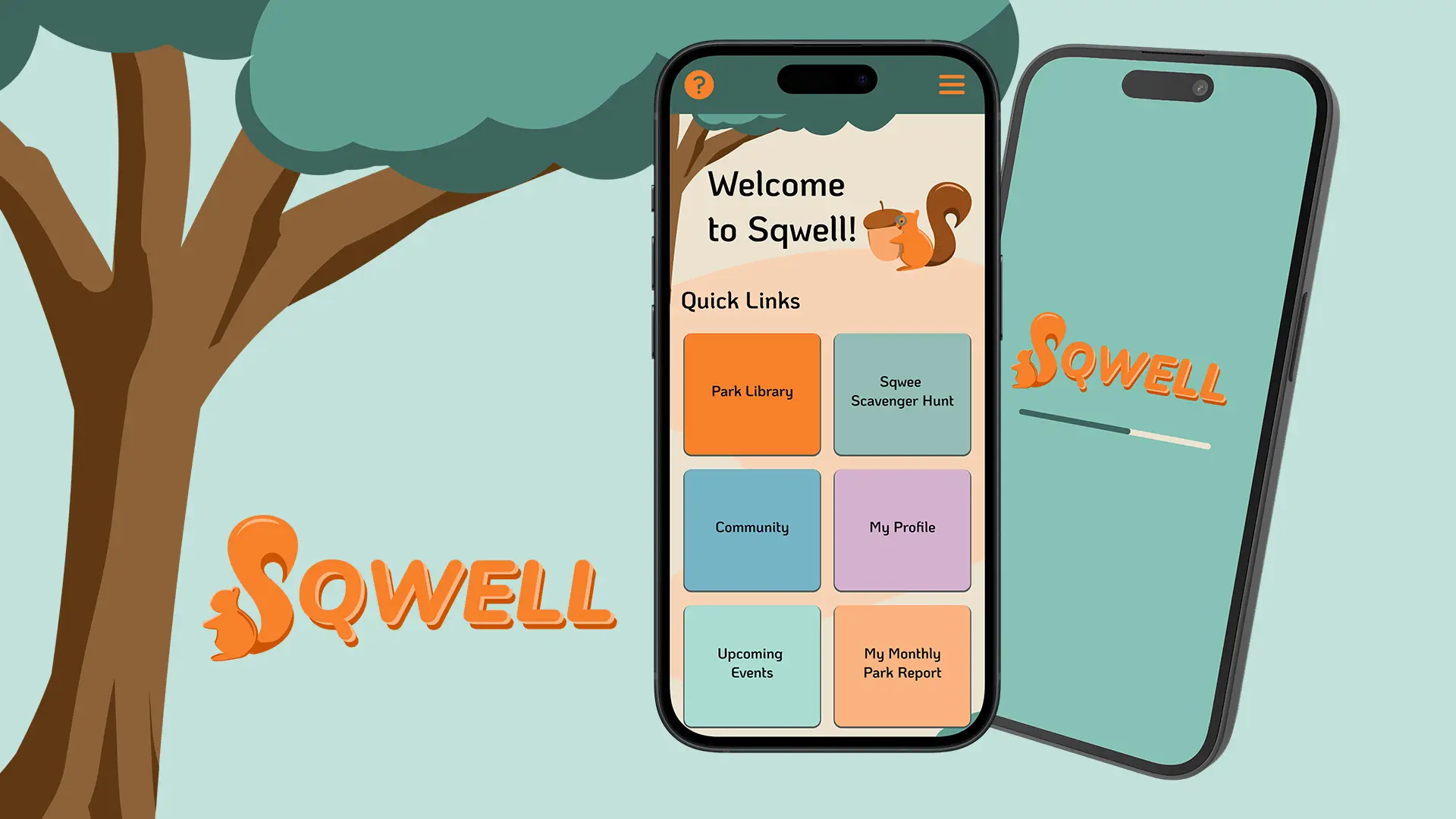
Sqwell is an interactive web app, built by a three-person student team, that helps individuals and families rediscover the outdoors through fun, engaging experiences. The platform lets users locate nearby parks, explore local plants and neighbourhoods, and take part in gamified activities that make outdoor exploration rewarding.
An interactive map lets users filter parks by distance, while scavenger hunts and point-based leaderboards encourage repeat use and friendly competition. Accessibility and engagement were central: vibrant earthy tones and Sqwee, the squirrel mascot, create a welcoming atmosphere for users of all ages.
Design & Iteration
Low-fidelity wireframes defined structure and core user flows, followed by a style guide that established consistent visual patterns inspired by nature. Mid-fidelity wireframes refined layout and interactions, and high-fidelity prototypes introduced polished visuals and interactive elements.
Usability Testing and Iteration
Usability testing highlighted areas where navigation, map interactions, and game mechanics could be clearer. Based on this feedback, the design was iterated to improve clarity, reduce friction, and better support user goals. Once validated, the final designs were implemented in code, keeping the developed product close to the intended experience.
Visual Design and Engagement
Sqwell's visual design uses vibrant, earthy colours to evoke nature and playfulness while remaining accessible and readable. Sqwee, the squirrel mascot, serves as a friendly guide throughout, making the app approachable for younger users and families. Gamification elements like scavenger hunts and leaderboards motivate exploration without overwhelming users.
Key Learnings
- Gamification is most effective when it supports, rather than distracts from, core user goals
- Personas kept design decisions aligned with the needs of very different users, from families to older explorers
- Usability testing was essential for balancing playfulness with clarity and ease of use
Together, these reinforced the importance of designing experiences that are both engaging and intuitive.
What I'd Do Next
To keep evolving Sqwell, I would focus on validating long-term engagement and expanding accessibility.
- Run follow-up testing to understand how users interact with the app over time and which features drive repeat outdoor exploration
- Explore partnerships with local municipalities or parks organizations to expand content accuracy and coverage
- Refine accessibility features, including clearer contrast, additional language support, and simplified interactions for younger or less tech-savvy users
- Define success metrics such as repeat usage, completed scavenger hunts, and self-reported activity levels to guide future iterations and measure real-world impact